
Monday, November 15, 2010

Bison + Been Busy


It's been a crazy autumn. But now that Daylight Savings has kicked in, and the sun is going down at 4:30 in the afternoon, no one on the East Coast will ever leave the apartment again. Including me.

Anyway, I honestly and truly cooked the bison pictured above -- kosher and procured from Wegman's (what don't they sell?). Though it must be said that the store's excesses of the Christmas season are a bit loathsome -- the kosher deli counter is the only part of the Dewitt store that isn't festooned with wreaths, ornaments, and the like.

Then again, they have a kosher deli.

To cook the bison, faithful companion diced garlic (several cloves per steak) and tossed on some soy sauce. The demands of such starving creatures as this one


forbade long marinating.

No matter; it tasted great nevertheless.

Directions

Broil for five or so minutes per side; serve with roasted squash and wilted greens.
Change into stretchy waistband pants.
Repeat the next time you have 30 bucks to spend on meat.

Thursday, October 7, 2010

One Cake, Two Ways: Sour Cream Coffee Cake


Growing up, we visited with my father's relatives almost every weekend. These visits revolved around eating. On some visits -- if the cake, lunch, snacks and treats weren't enough -- my great uncle would send us home with a sour cream coffee cake, carefully wrapped in foil, and tucked neatly into an empty cereal box.

This, along with his vegetable soup, was one of his iconic recipes. No one knew how to make it.

Going through his apartment this past fall, I looked for recipes. I found a few of them -- though not for the soup, which he'd learned to make in the Russian army. There were variations on variations on variations for the sour cream cake -- handwritten and clipped from the New York Times Magazine, among other publications. Of course, the handwritten version lacks any direction; it's a list of ingredients only.


This past Yom Kippur, I made two versions of the cake. One came out super flat and buttery -- that was the New York Times's version. The other, pictured above, was puffy the first day, but sank somewhat the next. Partly that's because it calls for baking powder and baking soda, but also because I substituted tofu for some the sour cream. The point is, both versions were tasty, but need further refining -- especially as I'm trying to turn this parve.

Stay tuned for further experiments with the sour cream cake this fall. The roadblock -- as with all cooking experiments -- is that one must literally eat one's experiments. (My faithful companion/photographer isn't one to shy away from dessert -- this is the person who orders six (6!) cider donuts at a time, and finishes them on the way home -- but even he has his limits.)

Batter:
2 cups flour
1 cup sugar
1/4 cup butter
2 eggs
1/2 pint sour cream (** I substituted soft tofu for part of this)
1 tsp baking powder
1 tsp baking soda
1 tsp vanilla

Topping:
1/2 cup crumbled walnuts
1/2 tsp cinnamon
1/4 cup sugar

Directions:

Combine dry ingredients

In a separate bowl, cream the butter and sugar. When well blended -- you can do this by hand, people -- add eggs and vanilla.

Add about half the dry ingredients to the butter, sugar, egg, and vanilla. Stir. Then add part of the sour cream. Alternate between the sour cream and the dry ingredients until it's all mixed together.

Butter a 9 1/2 x 11 inch baking dish; pour in the batter.

For the toppping, combine the nuts, cinnamon, and sugar, and spread evenly over the top.

Bake at 350 for 40 minutes (ish) -- but keep your eye on it, and be sure to take it out of the oven as soon as a testing fork comes out clean.

Monday, September 13, 2010

Chana Punjabi; Kosher Ghee = Glee


I am not going to lie.

This summer and autumn have been busy as all get out.

For Yom Kippur -- that is, to break the fast on Yom Kippur -- I'll be preparing my great uncle's famous sour cream cake. (Recipe TK.)

For now, exciting news in hecshered land: Purity Farms makes organic, kosher ghee -- which is pretty readily available in any good-sized supermarket, or via the Internet. Even more exciting: I recently bought some.

I can't wait to use it to cook the New York Times's recipe for Chana Punjabi, which the Grey Lady ran back in March 2009 (Elaine Louie adapted it from Heather Carlucci-Rodriguez at Lassi, a shoebox-sized restaurant on Greenwich Ave in the Village. I used to go there all the time during graduate school, and the food is delicious.)

Here is my version:

Ingredients

1 tablespoon butter or ghee
1 medium onion, chopped
2 teaspoons minced garlic
1 teaspoon minced ginger
1 16 oz can tomatoes
1 1/2 teaspoons paprika
1 teaspoon salt, or as needed
1 teaspoon ground coriander
1/2 teaspoon garam masala
1/4 teaspoon turmeric
1 teaspoon freshly squeezed lemon juice OR champagne vinegar
2 15-ounce cans chickpeas, drained
2 tablespoons minced cilantro

Sides: yogurt, rice

Directions

1. In a medium saucepan over medium-low heat, heat oil and add onion. Sauté until translucent and soft, about 5 minutes. Add garlic, ginger and chili, and sauté until soft and fragrant, about 3 minutes. Add tomatoes. Cover and cook until tomatoes are very soft, about 5 minutes, then remove from heat.

2. Purée mixture -- I use an immersion blender -- then add paprika, 1 teaspoon salt, coriander, the garam masala, turmeric and lemon juice/vinegar. Add chickpeas and bring to a boil, then reduce heat to low.

3. Cook for 5-10 minutes; add the cilantro. Remove from heat and enjoy!

Sunday, August 8, 2010

Borscht by Choice


photo courtesy joe lingeman. **we ate the soup before we took the picture.

Friday night, I did the unthinkable.

I made borscht.

By choice.

Worse, I made my boyfriend eat it.

For Shabbos.

Having recently reinstalled myself in the great white north, and anticipating the famously long and cold winters, I decided to experiment with this oft-dreaded dish.

I followed the Bittman recipe, which calls for boiling three pounds of chopped beets and one onion in six cups of water.

After the mixture softens, Bittman says to beat in two eggs. I used one. Then he says to add the juice of one whole lemon.

I upped the acid Bittman suggested, using champagne vinegar instead of lemon juice alone. I also served it with mini creamer potatoes and sour cream mixed with champagne vinegar and dill.

On the next go-round, I'm going to experiment with adding turnips to the broth. And I'll serve it warm, instead of as a vichyssoise. I'm also thinking -- per the advice of my collaborator and friend -- to substitute the traditional potatoes with a blue cheese crostini.

I'm also thinking about putting horseradish (homemade, from the root) into the stock. Is this suicide? Or worth a shot?

Wednesday, July 28, 2010

Garlic Scapes


courtesy jayirwin via flickr

Peppery, garlicy, crunchy, divine. I cut mine up and sauteed with onions and MORE garlic, then added green squash and tinned tomatoes to make a sauce. Per a friend's advice, I got rid of the bulbous bit at the end, which looked something like an artichoke heart.

They taste fresh, like a hit of spring. The feeling you'd think you'd get if you carried around mint leaves in your mouth. Adventerous and 100 percent yum.

Monday, July 26, 2010

The Flip Side of Eating: Orthodoxy and Exercise


courtesy wallyg via flickr

For me, growing up, exercise was important. But not in the way that it seems to have been in secular, Christian, or non-Orthodox communities. Rather than working out, the emphasis for us was on the brain.

For evidence, I offer that, when it came to sports, my Jewish school competed in a so-called yeshiva league. That was the rule for basketball, soccer, and hockey. By contrast, we faced secular schools for such "brain"-oriented competitions as mock trial, model UN, and the like. You'd have an ice cube's chance in hell at seeing my yeshiva compete against Dalton in track.

You can see the evidence of this kind of hard living -- really, hard eating -- in the faces, skin, and bodies of many an Orthodox or charedi person. Making too much of the body in traditional cultures has been taboo, understandably so. Often, in the U.S. at least, vanity is antithetical to modesty.

But there seems to me nothing about not taking care of yourself that honors God.

Today -- some 15 years later -- it's different. Attitudes seem beginning to change. In Prospect Park, I see Orthodox and charedi women out walking, rollerblading, riding bikes for exercise. Sometimes, they're accompanied by another female friend. Other times, women are accompanied by their husbands.

The still-surprising and wonderful times are when charedi women are out on their own. Walking, skating, huffing it through the park. Grasping a water bottle in one hand. Striking out, on behalf of their bodies, alone.

Friday, July 16, 2010

Fruit soup 2.0


They say it will be 98 degrees tomorrow. The only thing keeping me from throwing up is my beloved box fan and the vat of fruit soup I just made.

A lot has changed over the past 12 months. Soon I'll be departing Brooklyn for greener pastures. And colder winters. And a horrible mall called Destiny.

Most important, I'm now making the fruit soup with plums.

Which sound like a vaguely Shakespearean term for testicles.

Tuesday, July 13, 2010

Why eat bacon if...


You can eat spiced marcona almonds? They are spicy, salty, addictive, and delicious.

Epicurious has a great recipe for them here.

Do yourself one better and buy packs of the suckers from the Park Slope Food Coop.

Thursday, December 10, 2009

Cooking Makes a Comeback


So much promised for the new year. Handing over private information you wouldn't share with a stranger at a bar (thanks, census); the Dubai International Arabian Horse Championships (book early!); and, of course, waiting with baited breath to see if residents of Vancouver, Washington, tired of playing second fiddle to British Columbia, change the town's name to Fort Vancouver (a civic initiatve launched at no less hallowed ground than Tommy O's).

And, of course, the blog. I've been inspired by the discovery of some of my grandmother's recipes (long thought lost) and this New York Times story, which features non-Jewish chefs who cook their spouses' kosher favorites on the holidays.

As my friend points out, the article is "amazing because basically every couple is jewish woman-goy man... quite a change for the shiksha-loving NYTimes... when did this happen? "

Thanks for getting with it, NYT.

Your moment of zen:

“I would love to cook the Seder meal,” one famous non-Jewish chef said of Passover dinner with his in-laws. (He asked to remain anonymous to avoid their wrath.) “The food has got to be better.”


Clearly he's been married long enough to anticipate the wrath. Good job, anonymous.

Sunday, August 23, 2009

This Soup Will Save Your Life


I've been living without air conditioning, either because I'm a masochist or lazy, or some combination thereof. (Though I do have a mighty fine box fan in the window.)

Anyway, as a result, I've been making this cherry soup like crazy. It was the star of the first-ever Brooklyn Kosher-Test Kitchen. It's inspired by Mark Bittman, but I've changed it. It is also as parve as you wanna be.

Ingredients
1-2 pounds sour cherries -- one bag or plastic container should make about 4 servings
1 tsp cornstarch mixed w/ 2 tsp water
pinch salt
1/4 tsp ground cinnamon
1 tsp grated lemon zest
2 tbs canned cream of coconut (to taste)

Directions
Pit the cherries -- a messier ordeal than you might imagine. (At least, for this slob it is.) Put them in a saucepan with water to cover. Add cornstarch, salt, cinnamon. Cook on medium heat, until the cherries are very soft. Depending on how ripe they are, this could take anywhere from 20 - 30 minutes.

Add the lemon zest, then the canned cream of coconut. Puree with an immersion blender. This can also get messy! I wouldn't puree all the way - it's more interesting that way.

Chill.

Serve with ice cubes, sprigs of mint, yogurt (which makes it not parve, fyi). I particularly like it with fage and sprinkled with crushed walnuts.

The soup can be a first course, dessert, breakfast -- depending on how much you sweeten it. In that way, it's like those versatile dresses that get popular every few years, that you can wear in 101 stupid ways.


Difference between soup and dress? Soup you can eat. And it is considerably less complicated than the above.

FYI: Bittman calls for sugar to sweeten, but I think we all eat too much white sugar as it is. And this cream of coconut -- which you can freeze, by the way -- is kosher, and keeps the dish extra fruity.

Tuesday, August 18, 2009

Long, Strange Trip + turkey kebabs and mint chutney


It wasn't strange at all, or very long. I journeyed, among other places, to the land of Lewis and Clark. This was pretty thrilling for someone who grew up playing the Oregon Trail video game at day camp.

Anyway, prior to this, I held my first Brooklyn Test Kitchen: Cheeseburger-a-thon at my apartment. The goal was to create a beef burger with blue cheese. The result was a turkey kebab with a strange cheese "sauce." Or rather, because the cheese was parve -- made with vegan ingredients -- a "cheese" sauce. Also, because it was the nine days -- the period of time before Tisha B'Av, a mournful day of fasting on the Hebrew calendar, and a time when one typically, or traditionally, does not eat meat -- I couldn't find beef anywhere in all of Brooklyn. Only ground turkey.

In the end, I made delicious kebabs, served with sour cream and mint chutney. The kebabs, or sausages, are quite hearty and delicious, and taste like red meat (but for way less calories or environmental impact, for that matter). The "cheese" sauce is still in the test area; I'm going to experiment with nutritional yeast for the next go-round.

Kebabs/Sausage Patties

1 pound ground turkey
1 egg
2 - 3 cloves garlic, chopped
1/2 onion, chopped
handful minced dill
handful minced chives
pinch ground ginger
2 tbs (or more) chicken curry (powdered)
1/4 cup breadcrumps (optional -- for a Pesach version, leave it out; the worcestershire sauce too)
splash worcstershire sauc

Mix all of those ingredients in a bowl -- but do not overmix. Then form into very small - about 1.5 - 2 inch patties -- and grill, either outside, on a stove-top pan, or in the broiler. Truly delicious. I served them with Tofutti sour cream, which is parve. To go with it, you can also whip up a super fast mint chutney.

Chutney courtesy Epicurious.com
1 cup packed fresh mint leaves
4 scallions, coarsely chopped
1 small fresh green serrano chile, coarsely chopped (1 to 1 1/2 teaspoons), including seeds
1 large garlic clove, chopped
1/4 cup fresh lime juice
2 tablespoons water
2 teaspoons sugar
3/4 teaspoon ground cumin
3/4 teaspoon salt

Blend ingredients a food processor, and you're done.

The take-home of the whole event was that cooking is so much like writing. You think you're going to make one thing, and in the end it's something else. The trick of it is to figure out what you've done, and what to do with it.

Thursday, July 23, 2009

Parve Cornbread


So I'm a huge meat person. But more and more, I look to vegan recipes, especially for side dishes. That makes it possible to serve a meat entree with side dishes that would otherwise be milchik - and therefore not kosher.

This cornbread recipe comes courtesy of my friend's cousin. She writes:

This is a delicious basic vegan cornbread. It is moist and crunchy and corntastic. It is not a sweet bread, but a bread to be savored with soup or smothered with guacamole. For best results, use old-fashioned cornmeal.

Ingredients
2 cups cornmeal (I like coarse ground)
1 cup unbleached all-purpose flour
2 teaspoon baking powder
1/3 cup canola oil
2 tablespoons maple syrup
2 cups soy milk
2 teaspoons apple cider vinegar
1/2 teaspoon salt

Directions
Preheat oven to 350, line a 9x13 baking pan with parchment paper or spray the bottom lightly with non-stick cooking spray.

In a medium bowl, whisk together the soy milk and the vinegar and set aside.

In a large bowl, sift together the dry ingredients (cornmeal, flour, baking powder and salt).
Add the oil and maple syrup to the soy milk mixture. Whisk with a wire whisk or a fork until it is foamy and bubbly, about 2 minutes.

Pour the wet ingredient into the dry and mix together using a large wooden spoon or a firm spatula. Pour batter into the prepared baking pan and bake 30-35 minutes, until a toothpick inserted into the center comes out clean. Slice into squares and serve warm or store in an airtight container.

Wednesday, July 15, 2009

I can't believe it's kosher, part 1

Idea. Coca-Cola shares its red jacket with the West's most famous fat man. No, not the unsung heroes of Nathan's Famous hot-dog eating contests.

I mean, Joey Chestnut and Takeru Kobayashi are hardly porkers:


I'm talking about this guy.


He didn't figure that big into my childhood, either, but neither did Coke.

Which brings me to my point.

In 1931, the Coca-Cola company hired Haddon Sundbloom to create an image of Santa drinking Coke. Until Sundbloom's portrait, Santa was more commonly pictured like this:


Wait, no.

He looked like this:


Or this:


Or this:


Basically, if Coca Cola is responsible for creating the greatest goy in the world, then how come Orthodox Jews will drink this stuff on Pesach? Why, in fact, is Coke kosher at all?

As my friend points out: Coca Cola came out of Santa's rib.

Monday, July 6, 2009

I can't believe it's not kosher

Coming back late from Montauk yesterday, I noticed that the local bodega carried Vosges chocolate, a surprisingly highbrow brand for a place that devotes several shelves to Spam. While waiting for my friend, I perused the options. Mine eyes alighted on Mo's Bacon Bar, described as "applewood smoked bacon, Alder wood smoked salt, deep milk chocolate. 41% cacao."

Doth mine eyes deceive me?

Honestly I couldn't believe it. Was I tempted? No, because I was conditioned to think that bacon smells like vomit. (Even so many years after graduating I still feel that way.) But I'm sure the salt + chocolate thing is excellent. So the truth is, in fact, I was a little jealous.

Anyway, a Google Images search revealed that it is, in fact, a thing. (More-observant readers might want to avert their eyes.)


I thought when it came to food that was bad for you, we were the light upon the nations.

But no.

Sunday, June 28, 2009

Acceptable vs non-acceptable hecshers

In order for something to be kosher, it has to have a hecsher, or "kosher approval" stamp, on it.


The gold standard:


Also acceptable:


But, beware the somewhat questionable:


Brief Interviews With Hideous Recipes

Dahl and paneer, courtesy of Mrigaa Sethi.

Dahl
Directions
Boil some dahl (lentils) and water (roughly 1:3 ratio) with turmeric and salt, and once it's turned into a nice loose porridge-like consistency, after about 15-20 minutes, heating ghee, cumin, garlic, and hot paprika in a small pan and tossing it over the dahl makes the whole thing BLOOM! Et voila. Eat with rice and yogurt (see if you can find an organic brand, without stabilizers), and you have a delicious, quick, and protein-rich meal.

Paneer
Directions
You'll need a cheesecloth, and you can find one easily at most food stores. Make sure it's a fine mesh, not one with giant holes.

Bring your desired volume of whole milk (half-gallon? quarter-gallon?) to a slow boil, and as it begins to rise, pour two tablespoons of vinegar into it. The milk and the whey will begin to separate immediately.

Add another tablespoon of vinegar if you think you need to -- eyeballing is a valuable skill in all cooking! -- and once you have this fluffy, beautiful white stuff, drain it into your cheese cloth, squeeze out the water, and wash out the vinegar. This is paneer.

You can cook the paneer as-is, with cumin, turmeric, triumvirate of spices, chopped onions and tomatoes.

If you want a block of paneer instead, tie up the cheese cloth tight and place a weight (I use a pot full of water) on it. In two or three hours, you'll have a solid brick.

Friday, June 26, 2009

Brief Interviews With Hideous Men No. 1

My father used to say that only in India would people understand why, if you put a little bit of cheese into an enormous vat of meat, you have to throw the whole thing away. It's because the country's Hindus, Jains, Buddhists, and Muslims get the concept of religiously-mandated eating. Also helpful: so much Indian food adheres to the regulations of kashrut. And given the recent opening of a fleishik Indian restaurant in Teaneck, not to mention the many vegan yogurts and milk products that make it possible to cook chicken tikka masala, it seems that kosher Indian food is having a bit of a renaissance.

To that end, I interviewed Mrigaa Sethi, a cook, writer, and teacher who grew up in India and Thailand. Mrigaa came to the U.S. for college, and presently lives in Park Slope, Brooklyn. She holds degrees from Emerson College and the M.F.A. program at New York University, and she is one hell of a cook. Lucky for us, she shared tips about cooking Indian food with ease and a few of her favorite recipes. This is part 1 of 2 installments.

Who taught you to cook?

My mother, of course! Though if you ask her, she'll say having me in the kitchen still makes her crazy! She gets anxious watching me wield a knife with my left hand!

Seriously, though, at home I was never expected to learn these things -- none of that "you must learn to cook for your husband" stuff. But after a year away at college in America, trekking out in the snow for mediocre $13 curries, I came home and seemed to pick up my basics in just a couple of months. These days my mother imparts recipes and ideas over the phone, or even via G-chat.

Can you could suggest some typical and simple Indian recipes?

There is an impression out there that Indian food is laborious and technically complicated, but it's not -- unless you hate chopping vegetables.

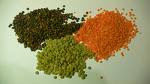
It doesn't get any more basic than dahl (lentil soup). It's the anchor of every meal. In India, dahl is even used as a symbol of any kind of food, a la "All I want in life is dahl and roti and someone to love." The yellow (split mung) dahl is easy, versatile, and absurdly flavourful.


My other answer is paneer (or Indian "cottage cheese" -- it's only the appearance that's similar, so don't substitute). People recognize paneer from restaurants, but it's possibly even easier to make than dahl.


Top three ingredients any amateur cook of Indian food needs in her kitchen.

I could write a whole cookbook around the blessed triumvirate of cumin (zeera), turmeric (haldi), and hot paprika (deghi mirch) -- if you don't want the whole thing turning bright red, however, replace with coarsely ground red chili powder. I'm still amazed at the range of flavours and dishes these spices are able to churn out. They really enhance the individual properties of whatever produce you're working with.

Technically speaking, is there anything absolutely vital to do when preparing Indian food? I've read that sauteeing the spices separately, then adding to the main dish, is key. True?

That's a great tip!

Have you got others?

1. Grind your own garam masala. Super easy in a coffee grinder -- just clean it out by grinding stale bread before and after, and wiping down with a damp cloth.

2. Sometimes my mother toasts cumin seeds until they're nearly black (tread with caution!) and grinds them coarsely (with a rolling pin, say).

3. Add a generous sprinkle of toasted cumin to some beaten yogurt with grated cucumbers and salt. Homemade raita -- a savory yogurt, with variations (cucumbers, boiled potatoes, onions and tomatoes), added to one's plate at the table.

3. After-you-turn-off-the-stove additions: cilantro, green chillies (get the tiny, short, bird-beak looking ones from an Asian market), or even a teaspoon of vinegar, in some cases.

Thursday, June 25, 2009

The Terrors and Pleasures of Kashrut Certification

Check it. http://www.kashrut.com/Alerts/ has an ongoing list, culled from rabbis around the world, about incorrectly labeled products. Some are milk, though labeled parve. Some are non-kosher, though labeled kosher (hekshered).

A sample:

Due to recent changes, only several Maalox products remain OU certified. Check packaging before purchasing.

Williams-Sonoma Chipotle Almonds and Williams-Sonoma Sweet Spiced Pecans, Williams-Sonoma, Inc. San Francisco, CA contain dairy ingredients as listed on the ingredient panel but the dairy designation has been inadvertently omitted. Future packaging will be revised.

And you thought your life was complicated. Bet you never considered that Maalox could be non-kosher.

Thursday, June 18, 2009

Brief Interviews With Hideous Men

The title of this post comes from a David Foster Wallace collection of short stories, which in early 2009 John Krasinski transformed into what seems to have been a relatively crappy movie.

It's been said before, but I'll say it again: Wallace was a genius. His essay, "A Supposedly Fun Thing I'll Never Do Again" -- the title piece of his 1998 essay collection -- fundamentally transformed my approach to journalism.

Anyway, he killed himself in September of 2008, shocking the hell out of me and everyone I know.

In his honor, I'm incorporating a new feature to What Is This Kosher... Interviews with people cooking, brewing, shopping innovative kosher foods. They are not at all hideous, and they are not all men. First installment should be up this week.

Wednesday, June 17, 2009

Fresh Food and the Law

Not totally Jewish-related, but all farmer's markets in New York will now accept WIC. WIC, which stands for the Women, Infants and Children program, defines its mission as providing grants "for supplemental foods, health care referrals, and nutrition education for low-income pregnant, breastfeeding, and non-breastfeeding postpartum women, and to infants and children up to age five who are found to be at nutritional risk."

New York is the first state in the nation to make the change. Previously, recipients could only put $20 per year toward farmer's markets.

I'm all about the farmer's markets -- as previously discussed, the farmer's market at Steamboat Landing is one of the best things about Ithaca. But if I can't afford to shop New York's farmer's markets regularly -- and if I'm in pretty good company -- I'm not sure how anybody on WIC is going to swing it. The milk's delicious, but I mean, it's $8 a quart. At that price, you start to feel guilty for putting it in your coffee. I can barely deal as it is with Harlem prices, where organic milk goes for $5.49 for a half-gallon. Is it that much better for you? Or the cow?

The new legislation, signed in to law by David "I didn't sign up for this" Paterson, opens up a whole debate about the extent of freedom of choice to which people receiving government money are entitled. Theoretically, I'm for greater choice. But in this case, should we focus more on encouraging good nutrition and stocking supermarkets in low-income areas with fresh, affordable food, than on granting universal access to hydroponically-grown kale?